
Welcome to my blog! As a part of my PRCM 3280 “Social media and PR” class, I get to explore the latest PR trends and write about them. I hope you enjoy!
Blog III: The Effectiveness of Word Clouds
Hello and welcome back to my blog! Today, I will be writing about how having visual aids like word clouds are important in decoding lengthy messages.
In public relations, professionals are often faced with large amounts of text-based data, from speeches to customer feedback in comments and reviews. According to Boost Labs’ “Word Clouds & the Value of Simple Visualizations,” word cloud generators can help simplify the process of trying to decode lengthy databases or long pages of text.
A word cloud visually represents text by making frequently used words appear larger and bolder, helping users instantly identify key themes and messages.
Here are two examples of word clouds generated with President Trump’s 2026 State of the Union Address–one in the shape of Uncle Sam’s hat and one in the default word cloud shape. The bigger and bolder the words are, the more often they were used. This allows people to understand the key messages he was trying to communicate to the public.


Instead of listening to or reading through pages of the State of the Union Address, these word clouds highlight the dominant ideas at a glance.
Word clouds are also valuable for identifying patterns in qualitative data. PR professionals can use them to analyze customer feedback. This helps uncover common concerns, positive sentiments or emerging trends, which can guide messaging and strategy.
However, word clouds are most effective when used appropriately. They should be used as a starting point for analysis rather than the only tool used.
Overall, word clouds are an accessible and cost-effective visualization method that simplifies complex text data, helping PR professionals better understand audiences and shape more effective communication strategies.
Thanks for reading,
Betsy
Blog II: The Importance of Engaging in Social Media Trends
Hello and welcome back to my blog!
Today, I’m diving into the importance of brands embracing social media trends.
Have you ever scrolled through TikTok or Instagram and noticed a particular song, prank or skit appearing repeatedly across multiple accounts? Chances are, you’re witnessing a trend in action.
A great example is the “Dad, what were you like in the ‘90s?” trend, often paired with the Goo Goo Dolls’ hit Iris. Users share photos from the 1990s to reminisce on brands’ starting points or celebrities’ peak fame. I’ve seen celebrities like Shaquille O’Neal show off their glory days, brands show their old storefronts and married couples share snapshots of their engagement. This trend increases engagement by evoking feelings of nostalgia and respect for companies’ growth.
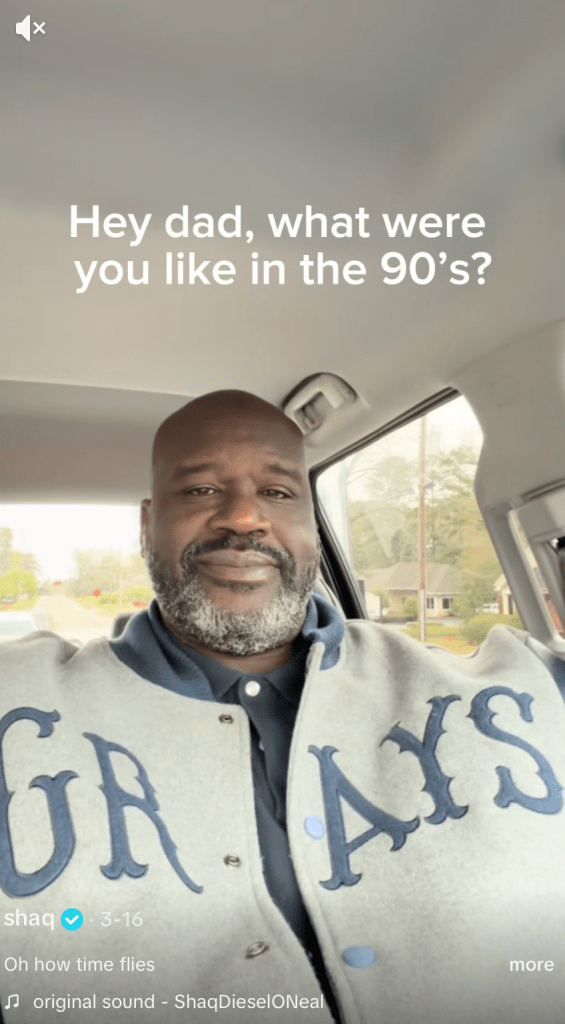
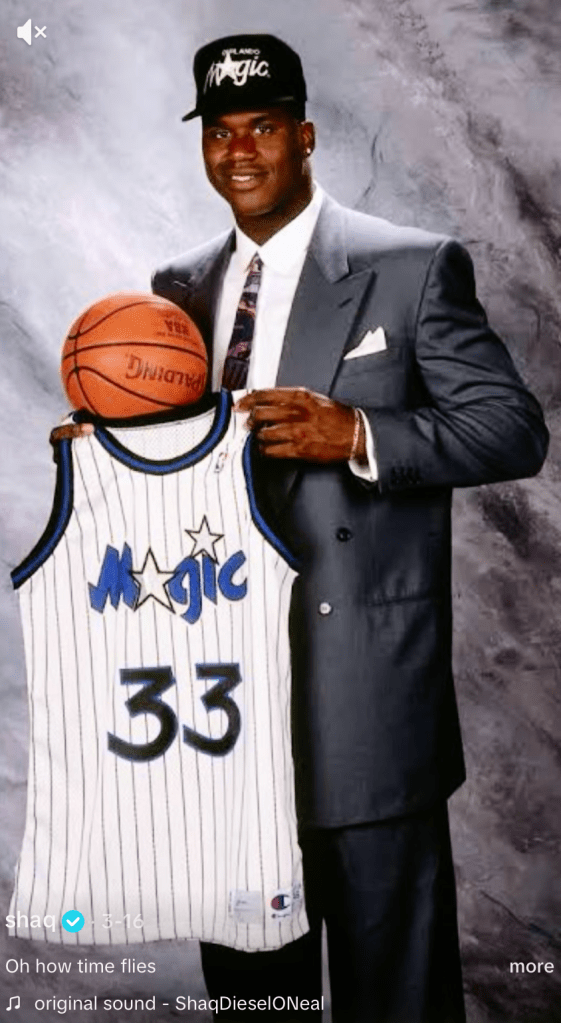
Shaquille O’Neal’s TikTok using the 90s trend
It’s hard to say who started the trend–or any trend for that matter–but it is crucial for companies to take part in trends like this to broaden their audience and increase engagement.
According to the Marketing 360 Blog, strategically engaging in trends that fit your company can help the business reach a larger audience, generate word of mouth, improve engagement and increase brand loyalty.
For example, as the social media manager of local Auburn clothing store Charming Oaks Boutique, I jumped on a trend that uses childhood photos of staff members along with their current job descriptions. “This is who’s running the store,” I wrote under a childhood photo of the store manager. This trend humanizes the company and allows others to see what each person does at the store. I noticed this trend all over social media, and in taking part in it, the post became our most-liked post.
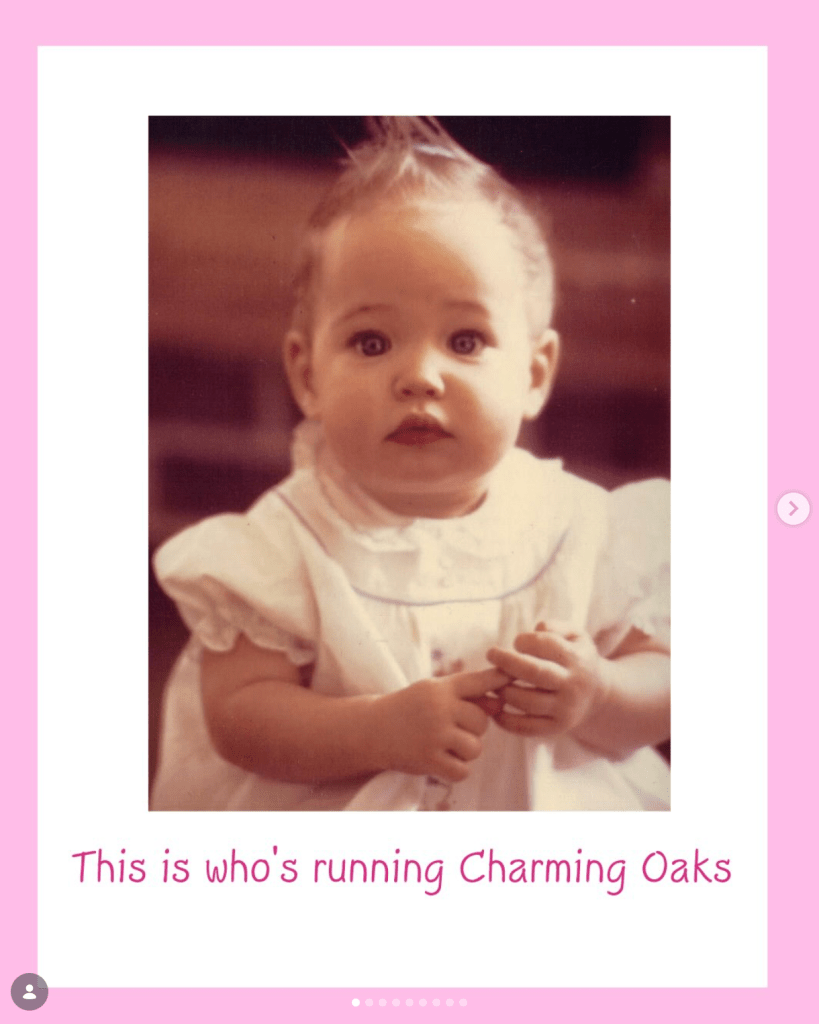
However, one important thing to consider is whether the trend fits your company. For example, Charming Oaks Boutique could not use the “What were you like in the ‘90s” trend, because it was founded in 2016. The childhood photo trend worked, however, because it allowed us to showcase our staff and humanize the store.
So the next time you scoff at seeing a fourth video of the same trend, think about using it for your company–as long as it makes sense!
See you next time,
Betsy
Blog I: Charli D’Amelio & Dunkin’s’ Good Use of Influencer Marketing
Hi everyone! For my first blog post I wanted to highlight one influencer collaboration that just made sense: the partnership between Charli D’Amelio and Dunkin’ in 2020.
When I think about good uses of influencer marketing, I think of ones that feel natural rather than forced. If a company wants influencers to promote their brand, the best strategy is to work with those that already enjoy their product. Dunkin’ did exactly that after noticing Charli frequently posting with Dunkin’ drinks in her TikTok videos.
Charli D’Amelio is a TikTok star who rose to fame through her dancing videos, and quickly became one of the most famous creators of Gen Z. During the COVID-19 pandemic, millions spent hours on TikTok each day, and Charli was one of the creators who was sure to appear on users’ “For You” pages. Her most viewed TikTok received 203 million+ views, and fans often noticed her drinking Dunkin coffee before starting her dances.
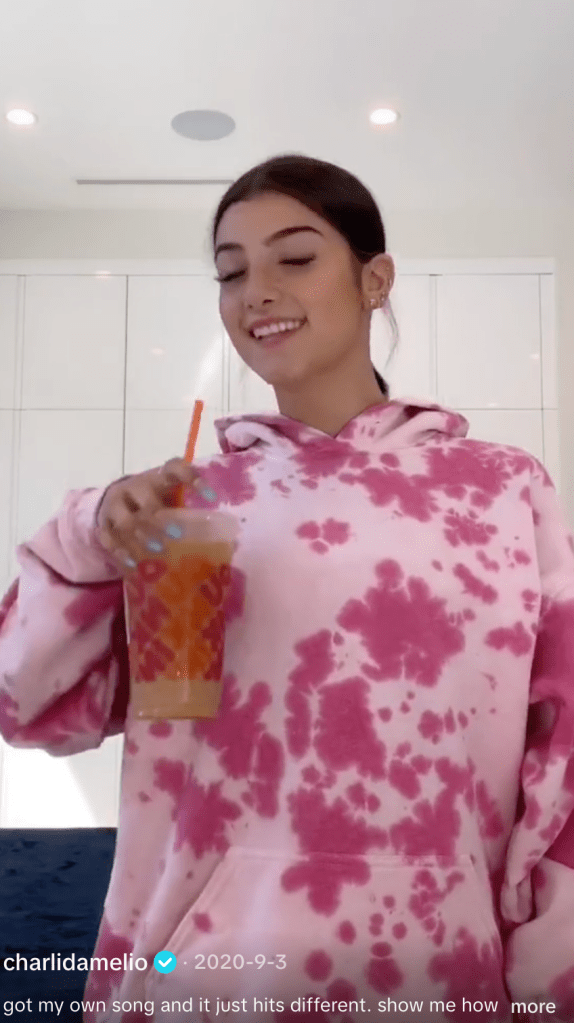
Dunkin’ officially announced its partnership with Charli on September 2, 2020, when it launched her signature drink called “The Charli.” They created a TikTok post together on the following day, announcing it to the world.
This was a wise decision because they took advantage of what was already happening naturally online. They knew their focused target audience at this time was Gen Z, they noticed a Gen Z TikTok star using their product and they partnered with her to engage with her audience.
Instead of forcing a random collaboration, they leaned into an opportunity that worked. Her fans were already curious about her Dunkin’ order, so turning it into an official menu item made the campaign feel authentic rather than overly promotional.
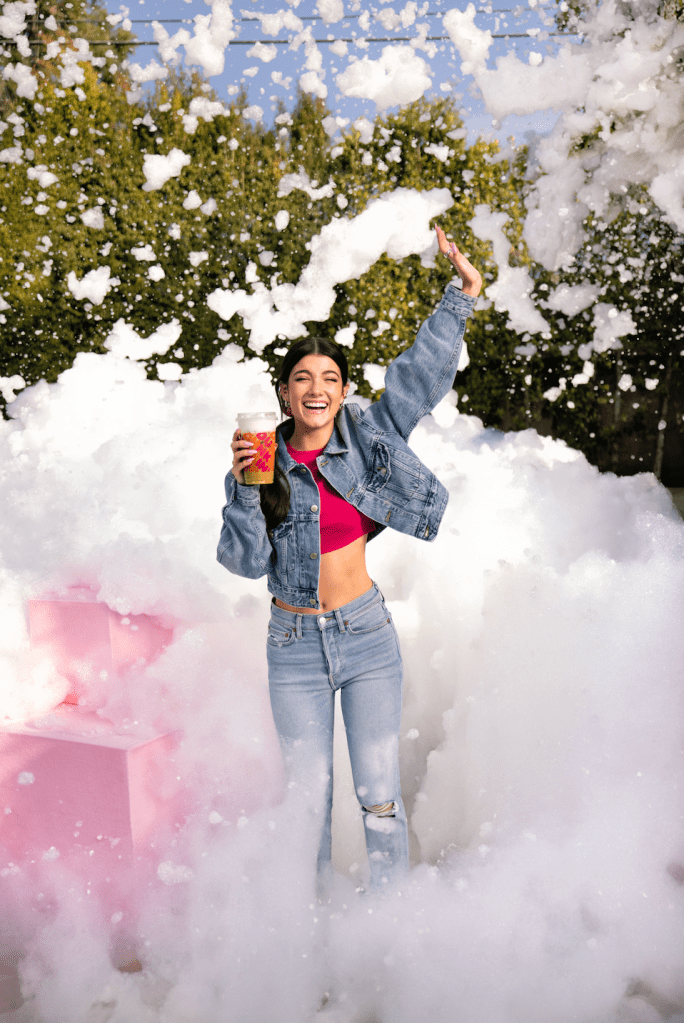
The drink itself was simple: a cold brew coffee with whole milk and three pumps of caramel swirl. However, by naming the drink “The Charli,” Dunkin’ turned an ordinary menu item into something that felt personal to fans. People weren’t just ordering a coffee anymore—they were ordering the same drink their favorite TikTok creator was known for. This created a sense of connection between Charli, the brand and her audience.
The collaboration also spread quickly across social media. Fans began posting TikTok videos of themselves ordering “The Charli” at Dunkin’ drive-thrus, as well as videos of trying the drink for the first time. Dunkin’ encouraged this engagement by promoting the launch across their social media platforms and creating contests and online challenges for fans. Because TikTok was already a platform built around trends and participation, the campaign naturally encouraged people to join in and create their own content.
From a public relations perspective, this partnership shows how powerful influencer marketing can be when it feels genuine. Dunkin’ didn’t just pick a random celebrity because of her large following. Instead, they partnered with someone who had already displayed a real connection to their product. This helped the campaign feel believable and prevented it from coming across as a typical advertisement.
Overall, the Charli x Dunkin’ collaboration is a great example of influencer marketing done right. By partnering with an influencer who already loved the brand, Dunkin’ created a campaign that felt authentic, engaging and memorable. This partnership shows that the most effective influencer campaigns are often the ones that grow naturally from real connections between creators and the brands they promote.
Thanks for reading,
Betsy

